
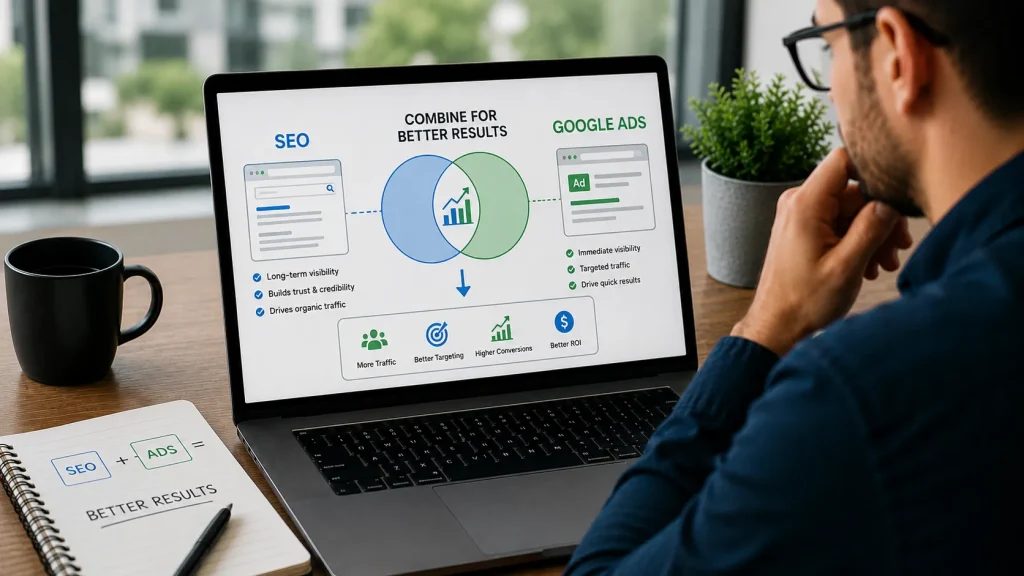
SEO and Google Ads work best when we use them together instead of treating them as separate channels. Businesses that combine organic search and paid advertising often achieve stronger visibility and better lead quality. According to Google Economic Impact reports, businesses generally earn an average return of $2 for every $1 spent on Google Ads. At the same time, SEO builds long-term traffic without paying for every click.
Strong digital marketing depends on reaching customers throughout their buying journey. Some people are ready to purchase immediately, while others spend weeks researching options. SEO captures informational searches, while Google Ads targets users with high purchase intent. This combination creates more touchpoints and improves brand recognition.
Marketing experts often recommend using both channels because they complement each other. Google Ads delivers immediate traffic, while SEO creates lasting authority. When we combine data from both sources, we gain deeper insights into customer behavior and keyword performance. This strategy helps businesses generate better results and maximize marketing budgets.
Why SEO and Google Ads Work Better Together
SEO and Google Ads support each other throughout the customer journey. Paid campaigns generate quick visibility, while organic rankings create trust and long-term growth. Businesses using both channels often occupy multiple positions on search engine results pages, increasing click opportunities.
Research from BrightEdge shows that organic and paid search drive more than 68% of trackable website traffic. Appearing in both sections strengthens brand awareness and improves credibility. Customers often view brands with multiple listings as more reliable.
Key Benefits of Combining Both Channels
Several advantages come from using SEO and Google Ads together:
- Increase visibility across search results.
- Generate traffic immediately and long term.
- Improve keyword research accuracy.
- Build stronger brand recognition.
- Reduce dependence on a single traffic source.
- Support conversions throughout the buying cycle.
Businesses that diversify traffic sources usually experience greater stability during algorithm updates and seasonal fluctuations.
Using Google Ads Data to Improve SEO
Google Ads provides valuable information that can strengthen SEO campaigns. Paid campaigns reveal which keywords deliver the highest click-through rates and conversions. This data helps us prioritize SEO efforts around terms with proven value.
For example, if a Google Ads campaign shows that “emergency plumbing services” converts at 9.4%, we can create SEO content targeting that phrase. This approach removes guesswork and focuses resources on keywords that attract customers.
Important Metrics to Share Between Channels
| Metric | SEO Benefit | Google Ads Benefit |
|---|---|---|
| Click-through rate | Improve titles | Optimize ads |
| Conversion rate | Prioritize content | Adjust bidding |
| Search terms | Discover keywords | Expand campaigns |
| Bounce rate | Improve pages | Increase relevance |
| Device data | Optimize mobile pages | Improve targeting |
Digital marketing specialists often use paid search reports to uncover hidden opportunities that organic tools may overlook.
Creating a Full-Funnel Marketing Strategy
SEO and Google Ads serve different stages of the buying process. Google Ads performs well for transactional keywords, while SEO captures informational searches. Together, they guide users from awareness to purchase.
Someone searching “how to fix water damage” may find an educational blog. Later, that same person might search “water damage repair near me.” A Google Ads campaign can capture that purchase-ready customer. This journey illustrates how both channels support one another.
Matching Channels to Search Intent
We can align content and advertising with customer intent:
- Awareness stage: SEO blog articles.
- Research stage: Guides and comparison pages.
- Consideration stage: Remarketing campaigns.
- Purchase stage: Google Ads search campaigns.
- Retention stage: SEO resources and email marketing.
Marketing agencies frequently report improved conversion rates when businesses adopt a full-funnel strategy instead of relying on one channel.
How SEO and Google Ads Increase Conversion Rates
SEO and Google Ads help improve conversion performance when landing pages remain consistent. Users expect the same message whether they arrive through paid or organic traffic. Consistent headlines and calls to action increase trust and engagement.
According to HubSpot, companies that optimize landing pages can increase conversions by 30% or more. Fast-loading pages, relevant content, and clear offers contribute to stronger results. User experience remains essential for both channels.
Best Practices for Higher Performance
Businesses should follow several proven strategies:
- Use identical messaging across campaigns.
- Improve page speed below 2.5 seconds.
- Track conversions with analytics tools.
- Test headlines regularly.
- Optimize pages for mobile devices.
- Monitor keyword performance monthly.
Experienced SEO specialists recommend reviewing paid and organic reports together to uncover trends and improve decision-making. Get started with our in-depth resource on How to Optimize for Voice Search and Stay Ahead of the Curve
Conclusion
SEO and Google Ads create stronger marketing performance when used together. Paid campaigns deliver immediate traffic, while SEO builds sustainable growth over time. Combining keyword data, user insights, and conversion metrics helps businesses make smarter decisions.
Brands that integrate both channels often enjoy higher visibility, stronger credibility, and more consistent lead generation. By treating SEO and Google Ads as complementary strategies, we can achieve better results and create a more balanced digital marketing approach.